How cafes have evolved as a ‘Third Place’
The bridge between offline and online community building, and how cafes have become hybrid third places for modern life.

The bridge between offline and online community building.
Third places are defined as vital social spaces outside of our homes (first place) and workplaces (second place), where people gather to connect, relax, communicate, and ultimately build community. These places have been a substantial part of human life since its beginnings. Socializing, connecting, and communicating are cornerstones of human development and deeply tied to our mental well being.
Throughout history, humans have sought connection and companionship, particularly each other’s presence. Third places function as crucial meeting spaces where people discuss ideas, debate, and simply exist together beyond the routines of work and home. Over time, these places have taken many forms, ranging from public institutions like libraries and community centers to activity driven environments such as gyms, sports clubs, and local leagues, as well as more neutral spaces such as cafés. Since the opening of the first coffee houses in England in the 1650s, cafés have emerged as one of the most enduring third places, offering people a setting to meet, eat, drink, exchange ideas, and occasionally form new acquaintances outside formal social structures.
Fast forward to 2026, and the role of the coffeehouse has evolved. Once spaces defined primarily by conversation over a cup of coffee or tea, cafés now accommodate parallel forms of presence, where people not only converse, but also work, scroll, or create digital content side by side.
In a highly digitalized world, where we are constantly bound to our devices and able to work from places beyond offices and homes, writing blog posts, creating digital products, or consuming content, this immersion has sparked a renewed desire for real life experiences that extend online lifestyles into physical space. Cafés, in particular, have become hybrid environments, co-working or co-online spaces where individuals sit next to one another with their devices, quietly craving human presence during moments of digital immersion. Their appeal lies not always in direct interaction, but in the reassurance of proximity. Alone together in an environment that offers a quiet sense of community.
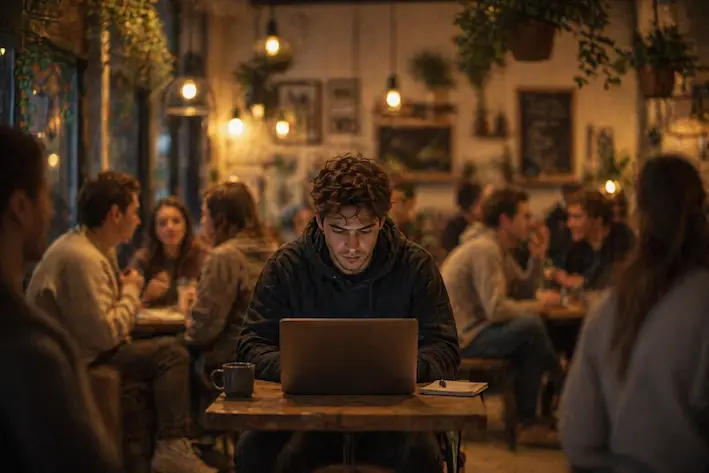
In this sense, cafés function both as a remedy for modern isolation and as a quiet reflection of the fragmented, digitally mediated lives that made them necessary in the first place. That’s why we created koffiework. A tool to find your new third place, a spot where you can enjoy online and offline community at the same time.
Keep exploring

Why koffiework focuses on specialty coffee cafes
Specialty coffee is not just about the cup. It often signals more care in sourcing, food, atmosphere, and the kind of place people want to return to.
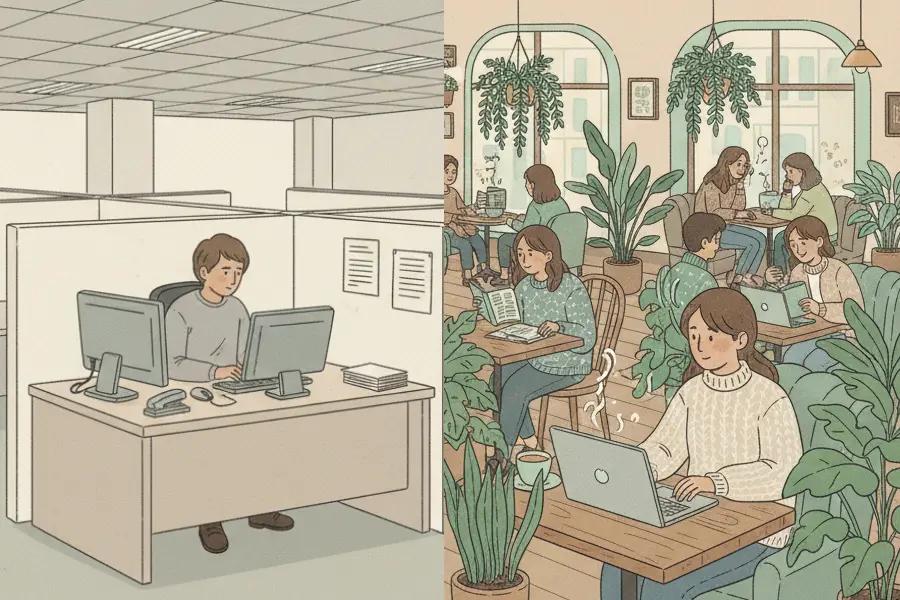
Why the quietest place isn’t always the best place to work: the art of background noise in cafes
A deeper look at the “coffee shop effect” and why a gentle buzz of sound can unlock focus and creativity.
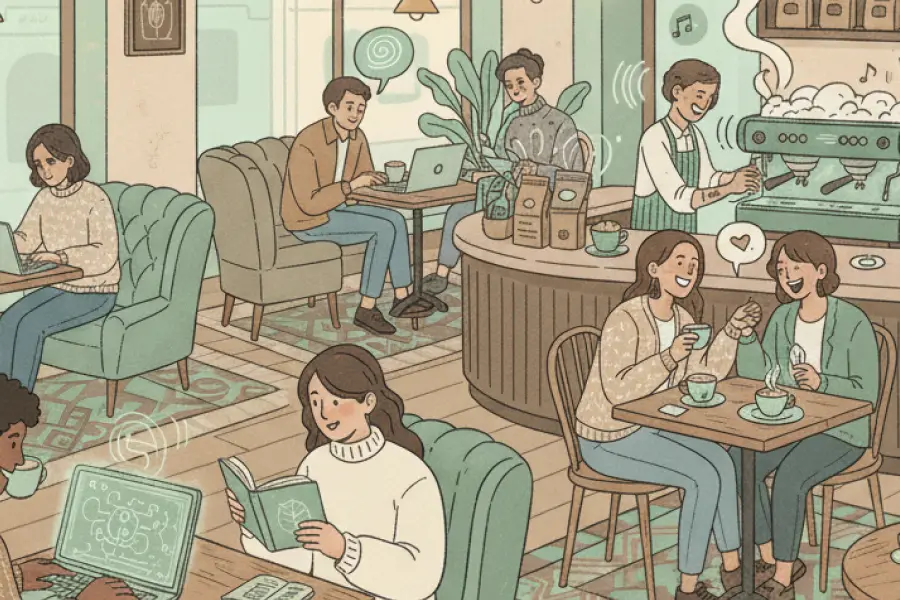
Why people are working more from cafes, and why that’s not a bad thing
Remote and hybrid work are reshaping cafe culture—here’s how laptop guests can create a win-win for guests and owners alike.
Sign up for our newsletter
Curious what we're brewing? Leave your email to stay in the loop.